Photographs from the Philippines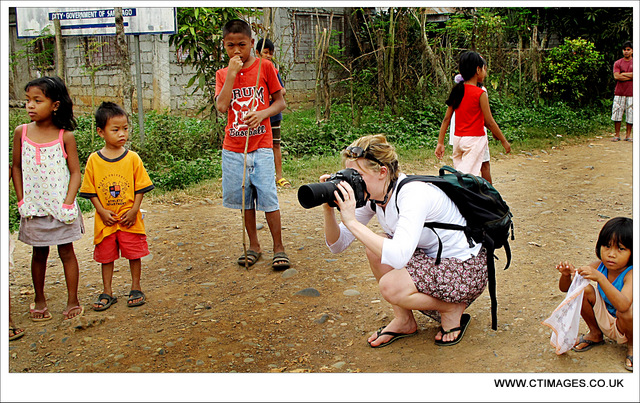
Images by Wedding and Portrait Photographer Cat Taylor Powell
Curated by Suzanne Cope. With thanks to Joy Kilpatrick at the Create Gallery, Bolton.
well… here it is! Our first Exhibition. Thanks to all the incredible people who found time in their busy diaries to attend our fundraising evening. And thanks to those who visited over the following weekend. We value each and everyone of you and are overwhelmed at the response in supporting the charities (Sefton Village & The Durian Project) and CT Images .

Beyond the tourist trail
Glimpses into the private lives of the ultra poor in the Philippines
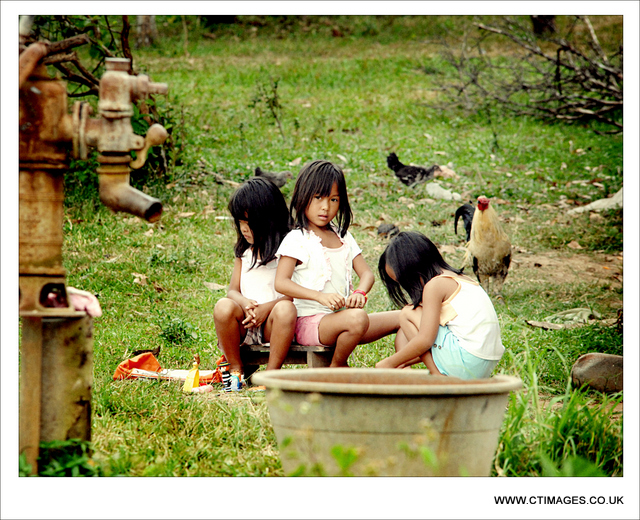
The images document a slice of life in the slums of the mega city Manila and countryside of Santiago, Isabella in the Philippines. This is a country known as the ‘Sick man of Asia’ due to its economic fall over the last 40 years. Like much of East Asia, it has a beautiful landscape hidden behind the western mega malls and enormous advertising billboards, fast food chains, designer hotels and gated mansions; a juxtaposition of natural beauty and man-made ugliness. A sight of gleaming skyscrapers hovering next to expansive shanty towns where it is not uncommon for twelve family members to live in the same room. For me the photos are a result of life, in its laughter or struggle, frozen for a split second to show strength, tolerance and contentment, despair, freedom and beauty.
Throughout the last ten years under the care of missionary Gillian Saunders and the Filipino charity leaders many people from the north-west have been able to visit this wonderful place. Every visitor has a different story of how this place has impacted their lives. We all see things differently and our hearts are touched in different ways. I travelled to Manila to visit my sponsor child and photograph poverty and despair; what I stumbled across was freedom, faith and community across the generations.
“Bahala na”: All things shall pass and in the meantime life is to be lived

The Durian Project is based in Manila the capital of the Philippines, a bustling city at bursting point because of its fast growing population. In the midst of the noise, chaos and smiling faces in the poorer areas of the city are thousands who are living without the basic necessities of life and with absolutely no chance of improving their standard of living. These people, known as the ultra-poor are right at the bottom of the socio-economic ladder and are very difficult to help because of their unstable and transient lifestyle.
The aim of the charity is to help these families, who were a community residing in a cemetery, begin to rise up that ladder so that they and their children have a hope for the future.
So here’s my pictures… I see them as a fusion of portraiture and documentary style, using minimal equipment and trying to make myself as inconspicuous as possible. This was incredibly hard in a place where they rarely see western people. Every now and then people would forget that I was there and I would succeed in recording a truly natural moment but these were fleeting as culturally the locals dispensed smiles as if they were going out of fashion! It was like photographing a reportage style wedding, like Suzanne and I do most weekends. Some people were shy and didn’t really want to be on camera, whilst others were very confident and had a fixed pose that appeared every time the camera was around. I wanted to find reality in the midst of the smiles. I felt uneasy photographing these wonderful people: as if somehow me (the do-gooder), recording their lives would be beneficial to them. Little did I know, that they were impacting the way I live my own life.


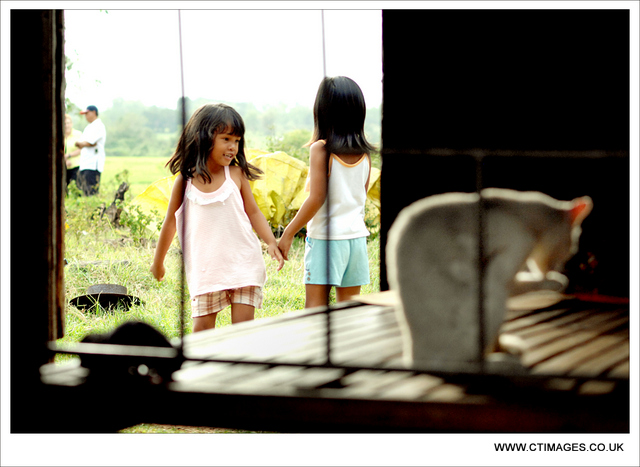
The pictures above are of Lovely Grace and her Mother. When she was still developing in her mothers stomach the hospital couldn’t find a heart beat and the pastor of a local church connected with the Sefton charity prayed for her. When she had a C-section to remove the child, they discovered she was alive. The house in the photograph is not theirs, they are looking after it for the owner. It is only a shell and has nothing in it. However it is better than her own home which is just a shack.


Although a remand prison, this jail in Santiago holds many prisoners that have been there for 7 years or more under the ruling ‘no money – no trial’. Unless they can pay they just have to wait, hoping that one day their case might get to the top of the pile and they might get a hearing. Some invariably end up serving long amounts of time when in fact they are innocent or have committed very minor offences. A team from Sefton Village Charity goes into the prison every Saturday morning to offer friendship and support. The team run a texting service for the inmates so that they can keep in touch with their families. Just this one single kindness makes such a difference to their lives. The inmates must suffer under a corrupt and unjust system but amazingly many form their own Christian groups and can’t wait to join in the worship and preach or testify to God’s goodness.


Nargassican squatter’s camp: There are many squatters’ camps in the Philippines, because of the amount of poverty. There is an unusual law however, that does protect the people which states; if the person owning the land wants the squatters to leave, they must find them somewhere else to live. This is how Nagassican came into being, squatters were moved out of more central camps to this place. The children in all these camps rarely go to school as there is little money for uniforms, shoes, books etc. Nagassican now has a lively thriving church working hard to meet the many needs of the people who stay there.

Shanty town in Manila. Children play in the polluted water that overflows from the canal near their homes. During the rainy season the river often floods washing away their homes. with no insurance, the Filipinos must simply start afresh and build again.


Paradise Village is an area of land used by squatters. During the run up to the elections the local mayor built this Ferris Wheel to make the area more attractive. Unfortunately the wheel has since broken yet the mayor is enjoying his time in office!

The above image is of orphans at a place called Sefton Village which is a project in Northern Luzon based in the town of Santiago, Isabella. It began as a Bible School and a childrens home which takes in abandoned babies and those in need of a home before being adopted. It now includes a pre-school, primary school, and a church which supports the local community in a variety of ways through the remand prison, in the public hospital, through schools feeding programmes and supporting the squatter camps. It is staffed entirely by Filipinos and recieves support and funding from the UK.

The hospital in Santiago. This is a public hospital that administers care to a third more patients that there is room. In some hospitals patients have to share a bed. There is no national health in the Philippines and only the very well off have health insurance. Patients have to settle their bills before they can leave; even new mothers have to stay until they have raised the finance. Sometimes they face the difficult situation of seeing their newborn go home with family whilst they wait in hospital.


Smokey Mountain This is a rubbish dump where many of our sponsor families live. Interestingly it is thought to be an improvement from the Cemetery as it enables families to live in community, something that is incredibly important to Filipinos’.

Shirley (mid 30’s) mother to three boys was abandoned by her husband whilst she lived on the cemetery. The Durian project provided her with a Pedicab (bicycle taxi) to become independent and support her family and the project also sponsored two of her boys. Shirley now lives in a one room shack on a reclaimed rubbish dump with a new partner, four beautiful boys, her mum and a fifth little baby on the way.

With a population of 90 million, a very poor education system, no health insurance, no benefits and corruption within the Filipino government perhaps the way to improve the poor’s day to day existence is by providing them with a trade, child sponsorship and supporting the local Filipino people to help their own community.
How does this affect us and how do we affect all this?
So how are we supposed to respond to the images? I find myself quietly outraged, frustrated for their situation and relieved to live in the West. Can our compassion and our finance stretch further than our family, our desires and our things? Does the word community just mean ‘local’? How would it feel to know you are making a difference in the lives of communities on the other side of the world?

